
12 Jul Top Trends Driving the Global Healthcare Chatbots Market
Healthcare Chatbots: Benefits, Use Cases, and Top Tools

This was made possible through deep learning algorithms in combination with the increasing availability of databases for the tasks of detection, segmentation, and classification [57]. For example, Medical Sieve (IBM Corp) is a chatbot that examines radiological images to aid and communicate with cardiologists and radiologists to identify issues quickly and reliably [24]. Similarly, InnerEye (Microsoft Corp) is a computer-assisted image diagnostic chatbot that recognizes cancers and diseases within the eye but does not directly interact with the user like a chatbot [42]. Even with the rapid advancements of AI in cancer imaging, a major issue is the lack of a gold standard [58]. Even after addressing these issues and establishing the safety or efficacy of chatbots, human elements in health care will not be replaceable. Therefore, chatbots have the potential to be integrated into clinical practice by working alongside health practitioners to reduce costs, refine workflow efficiencies, and improve patient outcomes.
Healthcare Chatbots Market Size Worth USD 543.65 Million by 2026 at 19.5% CAGR – Report by Market Research … – GlobeNewswire
Healthcare Chatbots Market Size Worth USD 543.65 Million by 2026 at 19.5% CAGR – Report by Market Research ….
Posted: Wed, 21 Jul 2021 07:00:00 GMT [source]
A distinctive feature of a chatbot technology in healthcare is its ability to immediately respond to a request, and this is another big benefit. In traditional patient care, a patient might have to wait for quite some time to get an answer to their question. With smart chatbots, not only the patient receives a reply within seconds, but exactly when the information is needed the most. And one more great thing about chatbots is that one bot can process multiple requests simultaneously, while a doctor cannot do so.
How to create chatbot for healthcare?
Let’s create a contextual chatbot called E-Pharm, which will provide a user – let’s say a doctor – with drug information, drug reactions, and local pharmacy stores where drugs can be purchased. The first step is to create an NLU training file that contains various user inputs mapped with the appropriate intents and entities. The more data is included in the training file, the more “intelligent” the bot will be, and the more positive customer experience it’ll provide. For example, for a doctor chatbot, an image of a doctor with a stethoscope around his neck fits better than an image of a casually dressed person. Similarly, a picture of a doctor wearing a stethoscope may fit best for a symptom checker chatbot. This relays to the user that the responses have been verified by medical professionals.
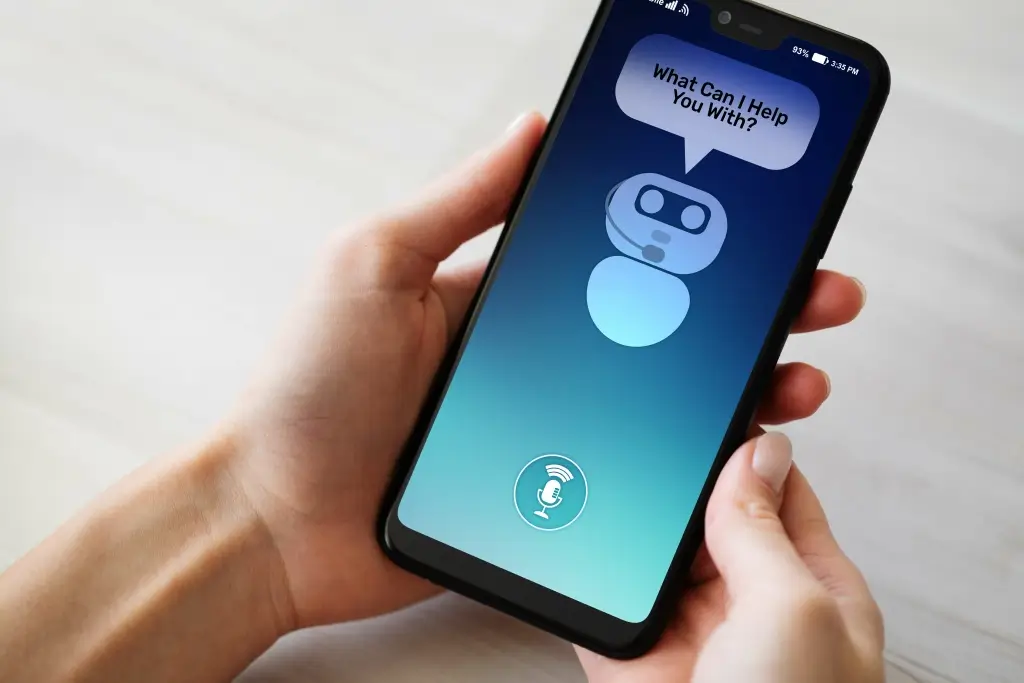
Although this messenger AI could also fall within the first category within this blog piece, it also provides a database of information. However, they’re littered with confusing nomenclature and jargon that’s confusing to patients seeking information. But, in 2018, the company announced that it’s now more accurate at identifying medical issues than human experts by 9%. We will customize the research for you, in case the report listed above does not
meet with your exact requirements. Our custom research will comprehensively cover
the business information you require to help you arrive at strategic and profitable
business decisions.
Improved user engagement
Multilingual chatbots cater to diverse patient populations, breaking down language barriers and ensuring that healthcare information is accessible to a broader audience. In urgent situations, chatbots can guide users through basic first aid procedures or provide instructions on seeking immediate medical assistance, potentially saving crucial minutes in emergency situations. Chatbots equipped with symptom-checking capabilities provide preliminary assessments, guiding users on whether their symptoms require immediate attention, self-care, or a healthcare professional’s intervention. A market grows only when it has valuable applications and changes people’s lives positively forever.
- It uses natural language processing to engage its users in positive and understanding conversations from anywhere at any time.
- Today, chatbots are capable of much more than simply answering questions, and their role in healthcare organizations is quite impressive.
- For example, in the field of psychology, so-called ‘script theory’ provided a formal framework for knowledge (Fischer and Lam 2016).
- The effectiveness of these apps cannot be concluded, as a more rigorous analysis of the development, evaluation, and implementation is required.
In this article, we will explore how chatbots in healthcare can improve patient engagement and experience and streamline internal and external support. When physicians observe a patient presenting with specific signs and symptoms, they assess the subjective probability of the diagnosis. Such probabilities have been called diagnostic probabilities (Wulff et al. 1986), a form of epistemic probability. In practice, however, clinicians make diagnoses in a more complex manner, which they are rarely able to analyse logically (Banerjee et al. 2009). Unlike artificial systems, experienced doctors recognise the fact that diagnoses and prognoses are always marked by varying degrees of uncertainty.
Instant access to medical knowledge
They answer questions outside of the scope of the medical field such as financial, legal, or insurance information. An internal queue would be set up to boost the speed at which the chatbot can respond to queries. As chatbots remove diagnostic opportunities from the physician’s field of work, training in diagnosis and patient communication may deteriorate in quality.
Chatbots in Healthcare [Part 2]. In April 2017 I wrote this story on the… by Tatyana Kanzaveli – Becoming Human: Artificial Intelligence Magazine
Chatbots in Healthcare [Part 2]. In April 2017 I wrote this story on the… by Tatyana Kanzaveli.
Posted: Thu, 19 Jan 2023 01:30:35 GMT [source]
In the early days, the problem of these systems was ‘the complexity of mapping out the data in’ the system (Fischer and Lam 2016, p. 23). Today, advanced AI technologies and various kinds of platforms that house big data (e.g. blockchains) are able to map out and compute in real time most complex chatbots in healthcare industry data structures. In addition, especially in health care, these systems have been based on theoretical and practical models and methods developed in the field. For example, in the field of psychology, so-called ‘script theory’ provided a formal framework for knowledge (Fischer and Lam 2016).
By End User
However, these kinds of quantitative methods omitted the complex social, ethical and political issues that chatbots bring with them to health care. In the healthcare field, in addition to the above-mentioned Woebot, there are numerous chatbots, such as Your.MD, HealthTap, Cancer Chatbot, VitaminBot, Babylon Health, Safedrugbot and Ada Health (Palanica et al. 2019). One example of a task-oriented chatbot is a medical chatbot called Omaolo developed by the Finnish Institute for Health and Welfare (THL), which is an online symptom assessment tool (e-questionnaire) (Atique et al. 2020, p. 2464; THL 2020).
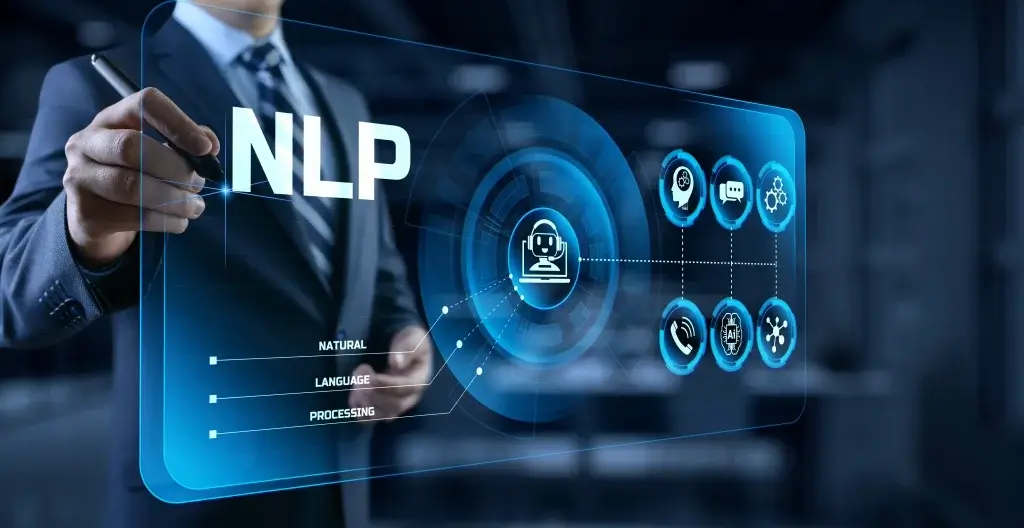
An important thing to remember here is to follow HIPAA compliance protocols for protected health information (PHI). These health chatbots are better capable of addressing the patient’s concerns since they can answer specific questions. Healthcare chatbots help patients avoid unnecessary tests and costly treatments, guiding them through the system more effectively. Depending on the specific use case scenario, chatbots possess various levels of intelligence and have datasets of different sizes at their disposal. Chatbots are programmed by humans and thus, they are prone to errors and can give a wrong or misleading medical advice.
No Comments